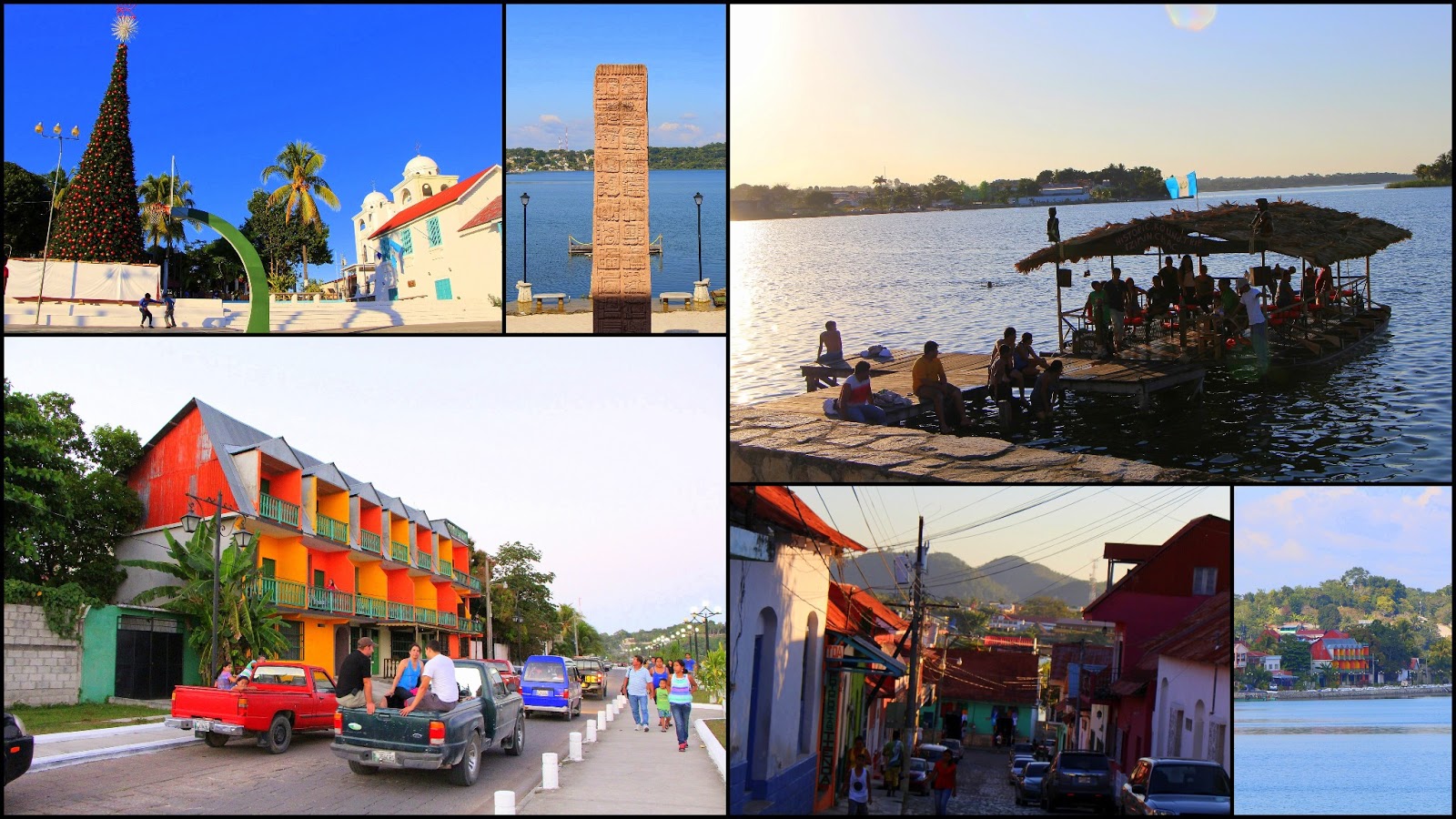
Wednesday, 6 March 2013

A sweet and sour taste of Cuba

"What's Cuba like?"

That is the most asked question since we've returned home from our travels.

Typical street scene in Havana, Cuba
I still struggle trying to explain our experience properly.

Cuba is a fascinating and challenging country and one unlike any I have ever visited before.

I loved it, but I hated it.

It's everything I thought it would be, but I wanted it to be so much more.

Let me explain.

We spent a week in the country's capital, Havana over New Year's Eve.

We had no issues with getting into the country.  We simply bought a $US15 'tourist card' from the airline at our departure point which was El Salvador.  Ignore the advice from the Cuban Embassy in Canberra and offered by travel agents that you need to organise a $AUD60 visa before you leave Australia , you don't.


"You English, speak English, man!"

That rude blast was our welcome and first impressions of Cuba at the airport.  We had tried speaking Spanish to a taxi driver, albeit not fluently but at least we tried.  He didn't appreciate it, instead he seemed frustrated with our very presence.

We brushed it off having travelled enough to not let one person having a bad day ruin our experience.  We learnt pretty quickly that Cubans are very well educated and almost all of them speak fluent English.

Old Havana, Cuba


Because we only stayed a week in Havana, we chose to stay at a hotel in the old quarter to be a close walking distance to most attractions.  If you don't want to stay in one of the government hotels, the other accommodation option in Cuba is family homestays or casa particulares.

We were greeted with a beautiful foyer and two ice-cold mojitos at the boutique Hostal Los Frailes, an old monastery.  This was the welcome to Cuba we had been looking for.

Hostal Los Frailes, Havana


An electrical fire in one of the rooms meant they had to put us up in another hotel around the corner for the night.  We had no problem with this, it was all part of the experience.

It turned out to be the Ambos Mundos Hotel, famous for where Ernest Hemingway used to stay when he was in town.

We walked into the foyer and walked back in time.

The beauty of Cuba is that for our generation, everything old is new to us.  We never experienced a fifties era of smokey piano bars, rhythm and blues bands on street corners, cigar-smoking men dressed in dapper suits drinking rum at lunch while old cars roamed cobblestone streets outside.

It's a set straight out of the movies.

We couldn't believe our luck as we sipped on another mojito at the hotel bar, but as I will explain later, Ambos Mundos Hotel is also where the most sour taste of Cuba was left in our mouths.

Ambos Mundos Hotel, Havana


There are many things to see and do in Havana.

Take a ride in an old 'yank tank' taxi.  It's no wonder they have become such an iconic symbol of the city, the streets are dotted with them.  They're not all 'official' metered ones though so always organise a price before you hop in.

Other transport options include the Coco scooter taxi and pedal-powered bikes which other than walking is the only way to get through parts of the old town which is blocked off to traffic.

Transport options in Havana, Cuba


Wonder the streets.

The colourful characters will keep you entertained for hours and you might even be lucky to catch a street fiesta especially around New Years.

Street fiesta, Old Havana
Be warned though, snapping away will cost you.  Cubans are very savvy when it comes to accosting tourists who have just taken a photo of them.  The standard price, 1 CUC which is the equivalent of $US1.

There are two types of currency in Cuba.  A currency for locals (Cuban Peso) and a currency for tourists (Cuban Convertible Peso - CUC).  The Cuban Convertible Peso is 25 times more valuable than the local currency which is why they're so keen to get their hands on them.

You can't change Australian money in Cuba either, Canadian is best as there is a bigger fee exchanging US dollars.  The few ATMs don't accept Mastercard either, only Visa.

Colourful characters of Old Havana, Cuba


Spend New Year's Eve under the stars.

One of the biggest parties of the year takes place in Havana's Cathedral Square.  Your ticket gets you a gala dinner, unlimited drinks and entertainment, set against the backdrop of a 235 year old cathedral.

Although a tad on the expensive side but comparable to celebrations back home, this is one of the best New Year's Eve parties I have ever experienced.

Cathedral Square, Havana
 Go and see the 9 o'clock cannon shot across the bay at Fortaleza de San Carlos de la Cabana.

In the 18th century, a morning and evening cannon shot boomed out across the bay to signal the opening and closing of the gates to protect the city.  Today the 9 o'clock cannon shot is a symbol of history and tradition, a great tourist attraction and a useful time keeping tool for locals.

It's also a great spot to take in the views of Havana City at sunset.

To get there, catch the local ferry across the bay to Casablanca, walk up the hill where Che Guevara's former house sits, take in the view at the big white statue of the Christ of Havana, continue past an open-air military museum with weapons from the Cuban Missile Crisis on display and onto the fortress.

You can also access Morro Castle from here which sits precariously between the bay and ocean, its presence still a reminder of the country's vulnerable past.
Witnessing the 9 o'clock cannon shot, Havana


I wouldn't normally include a cemetery as a must do for a city but the Colon Cemetery in Havana is pretty impressive.


Founded in 1876, the cemetery is spread across 140 acres, has over 500 major mausoleums, chapels and family vaults, 800,000 graves and 1 million interments.

It also has a 23 metre high monument to firefighters who lost their lives in the great fire of May 17, 1890.

Catch a taxi from the old town to get there, don't attempt to walk.  Take it from me, it's quite a distance!


Colon Cemetery, Havana


If you do want to stretch your legs, a great route to take is along the ocean's edge and sea wall of the Malecon, an 8 kilometre esplanade.

Despite most of the buildings along this stretch being quite dilapidated compared with inside the old quarter, it gives you a better sense of the 'real' Havana.

Malecon, Havana
Visit the Museo de la Revolucion (Museum of the Revolution).

Housed in what was the Presidential Palace, it became a museum following the Cuban Revolution when Fulgencio Batista was overthrown as President by Fidel Castro and his followers.  Bullet holes are still in the palace walls today and there is quite a collection of blood stained uniforms on display.

It is quite an interesting take on the events of that time, a lot of chest pumping propoganda which feels like Castro himself has personally written.

The most amusing item on display is a wall of caricatures of Batista, Ronald Regan, George Bush Senior and George W Bush with words including "Thank you cretin for helping us to strengthen the revolution".
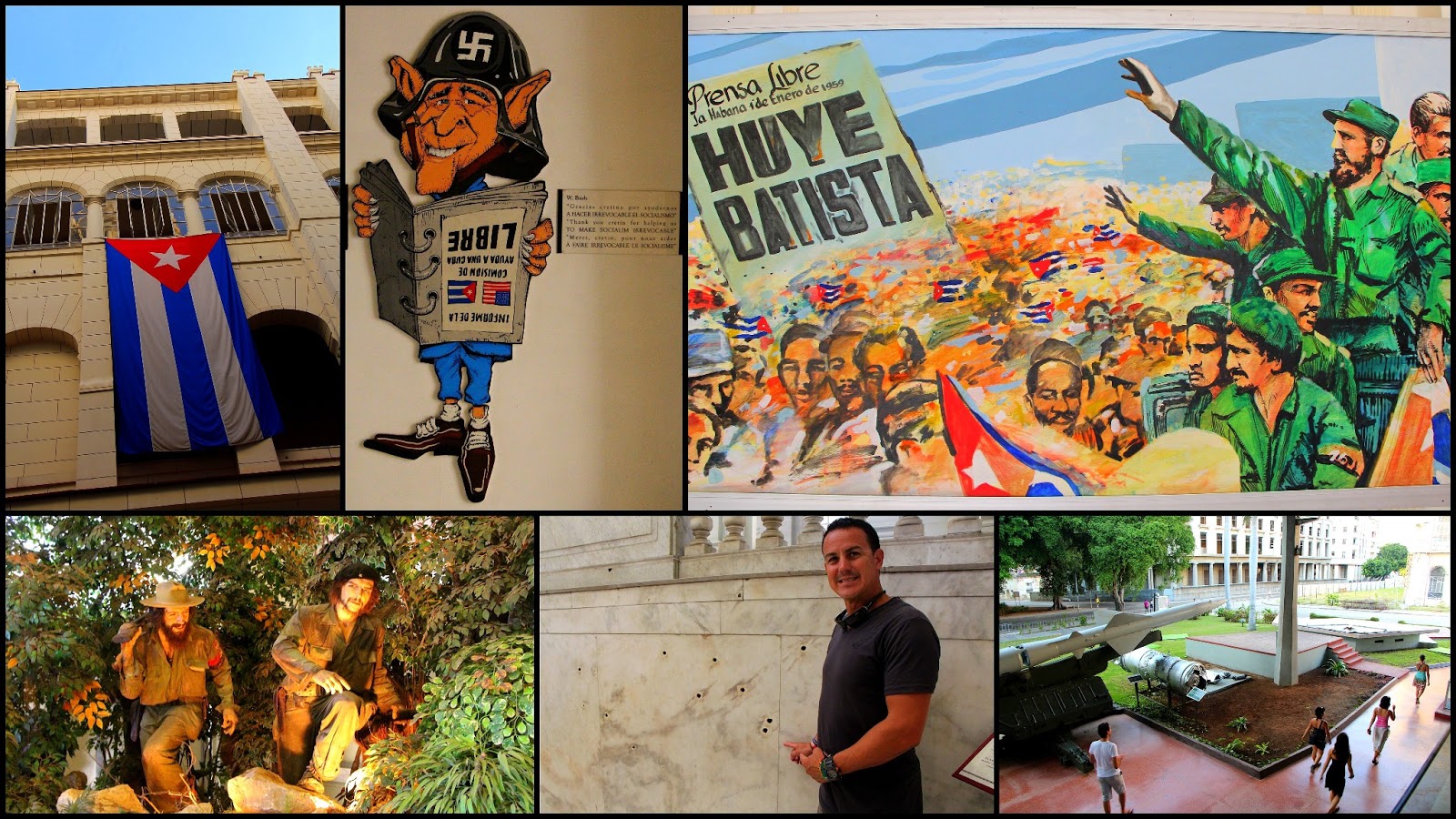

Museum of the Revolution, Havana


Head to the beach.

About a 20 minute drive from the city is the Playas Del Este, a 9 kilometre stretch of coastline scattered with beach towns.  We spent the day in Guanabo, a beach-side community favoured more by local tourists than international ones.

Having just been spoiled by the beaches of Mexico, Guanabo failed to impress us on the same level.  This is Cuba though and ruined and desolate buildings aside, the water was beautiful and a refreshing change to the hussle and bustle of the city.
Guanabo, Cuba


Have a mojito or two at the Havana Club Museum and Bar.

There's a great band and a great vibe.  At 4 CUC a drink though, you can find cheaper elsewhere.

Havana Club Museum and Bar


These are just a few of the many things to see and do in Havana, let alone the rest of Cuba.

And it seems word is spreading.

One report I read said that between 1990 and 2010 tourist numbers had risen from 360,000 to 2.66 million a year.  Wikipedia says that figure is now over 3 million.

One of the reasons for Cuba's recent improved tourist numbers, is that it is a country in transition.

After five decades of Cuban communist style rule, in the post Fidel Castro days there has been a shift away from state dependence.  Although Cuba is still ruled by a Castro, Fidel's brother Raul, Cuba is transforming into a country of individual responsibility and private enterprise.

One of the many signs of Fidel Castro around Havana, Cuba


Although it is a work in progress many Cubans still live in poverty and with restricted freedoms.

This is no more evident than trying to speak to Cubans in the tourism industry.  Trying to muster a smile from their faces is a hard task and in general they exude the epitome of unhappiness.  They don't dare to dream of being a tourist themselves one day, but whisper how lucky we are to be one.

We put all this down to some of the reasons we had our belongings stolen from the Ambos Mundos Hotel.

A camera case with USB sticks of all of our trip photos was taken from our room while were having breakfast.  We didn't notice until four days later but by then they insisted that nothing had been found, reported or handed in.

Frustrated and with no other option we offered a monetary reward.

Two hours later we were told there was a package waiting for us at the hotel reception and we had until 8 o'clock to pick it up.  It was all there, they had no use for USB sticks.

We considered not giving the reward we offered and just taking our stuff and leaving however we had just booked a taxi through our other hotel for 4am the following morning for the airport and didn't want to risk our safety.

This was so frustrating, not because we were blackmailed out of $100 but because it encourages them to continue doing it to other tourists.  They literally screamed from the back room when we left, it's probably more money than they get paid in a year.

As it turns out the taxi driver who took us to the airport also tried to rip us off which ended in an unpleasant argument.  We had pre-organised a price with the hotel but didn't reiterate it to the driver so he put the meter on and took us on a scenic route to the airport.  We stood our ground and walked off only paying the original price.

So it was in the final hours of our Cuba trip that almost ruined our whole experience and I hate that.  But I guess those moments can be the pitfalls of travelling.  Every experience is different and it all comes down to circumstance when you are there.

Cuba is not a place I am dying to return to right away however I would love to go back and see it again down the track someday to hopefully see its transformation and potential realised.

Markets, Havana


Thursday, 21 February 2013

Ruins and cobblestone streets of Guatemala

We hadn't heard great things about Belize City during our stay on Caye Caulker.

In fact it was locals who had told us not to go there because it was really quite dangerous.

With limited time and so much ground yet to cover, we decided to heed their warning and head straight to Guatemala.

I'm glad we did.

According to the United States consular affairs website Belize recorded 145 murders in 2012, a record number.  Belize's per capita homicide rate ranks among the highest in the world with the majority occurring in Belize City.  While most of the violence is due to an ongoing warfare between local groups over drug smuggling, threats and robberies against tourists are not uncommon. The Australian Smart Traveller website says you should exercise a high degree of caution in Belize because of high levels of serious crime.

Needless to say we were quite happy to jump straight off the water taxi at Belize City and straight onto a bus headed for the Belize-Guatemalan border.

Crossing the Belize-Guatemalan border


Within five minutes of crossing the border our smiles were ripped off our faces and so was the money out of our wallets.

Lesson learned, but when border authorities tell you there is a price to pay to enter the country, ask for written evidence.  We didn't and we paid the price.  It wasn't until a traveller behind us questioned the fee and argued with the officer that we realised we should have done the same.

A frustrating trip to the ATM where we received less money than we asked for and an overpriced tour later and our first impression of Guatemala wasn't great.

Lucky for them it was Christmas Day and the season for giving.  Unlucky for us.

We arrived in Flores, a town surrounded by lake Peten Itza, and our base to discover Tikal, the most famous Mayan ruins in Guatemala.

Don't get me wrong, Flores is lovely with the lake giving the town a peaceful, serene aura however it is quite small and there isn't much to do other than circumnavigate the water's edge and meander through the laneways.

Flores, Guatemala


The lake is a very popular spot for locals and because we were there on Christmas Day many families took the opportunity to spend time with one another by the edge.  At night the streets were lit up by flashes of firecrackers and laughter of the children lighting them.

Christmas night firecrackers light up the streets of Flores, Guatemala


We were up around 3 am for the sunrise tour of Tikal.

The bus took about 75 minutes to get to the park and then once through the entrance gates, we walked about 15 minutes in darkness until we were clapping by candlelight beneath the main temple.

Without sight our senses were heightened to the acoustics of the plaza which fascinatingly echos back the sound of the Quetzal bird.

A steep climb to the top of another temple and suddenly we were sitting on the steps of ruins which are thousands of years old staring out across the treetops of the Guatemalan rainforest.

In silence, we sat and waited for the jungle to wake.

Sunrise at Tikal, Flores
UNESCO lists 54 species of animals and 333 species of birds here and while not all of them were vocal, we started to hear the music of jungle's morning as the fog began to lift.

The mist clouded our view of a crystal clear sunrise however a foggy dawn didn't quell the magic and mystery of this ancient site.

The eerie atmosphere didn't clear until around 9 am when clear skies revealed the true beauty of this UNESCO World Heritage Site.
Tikal, Guatemala


Tikal's charm isn't what has already been discovered.

It is that many of the ruins and history are still uncovered with funding inhibiting excavation.  Due to the nature of the limestone, the ruins are better preserved under the ground than to be exposed to the elements.

It's beauty far surpasses that of Chichen Itza which in comparison, in my opinion, was very sterile and overcrowded by tourists.

Although doing the sunrise experience meant the hoards of visitors were yet to arrive, in those early hours with a handful of other tourists, Tikal felt like ours and ours alone to discover.

Tikal, Guatemala
Despite many travel warnings not to travel on public transport at night in Guatemala, we chanced a night bus to Guatemala City just so we didn't waste a day.

Once we set off, it wasn't the fear of being hijacked or robbed that concerned us the most, it was the rickety double decker bus with no shocks and a lead foot driver.

A ten hour trip swaying dangerously from side to side kept us awake all night and fearing every corner.

Like Belize City, we hadn't heard great things about Guatemala City so we decided to just travel on an hour further to Antigua.

Antigua is a beautiful, picturesque, colonial city, lined with cobblestone streets.  The UNESCO World Heritage Site used to be the capital until a series of earthquakes in the 1700's destroyed thousands of buildings.  You can still see many of the ruins today untouched where they crumbled hundreds of years ago.

Antigua, Guatemala
Antigua is also nestled between three forboding volcanoes which offer hiking and gravel boarding experiences for the adventurous.

The majestic mountain scene also offers a spectacular sunset vista from one of the many rooftop bars.

Antigua sunset, Guatemala
Antigua is a place we could have easily unpacked our backpacks for a while, opened our Spanish books again and really immersed ourselves in the culture of Central America.

Oh and it has really great coffee too, the best of all our travels this trip.

We were truly disappointed to leave this intriguing city.

Holistico Hostel, Antigua


Wednesday, 20 February 2013

We nearly died to get to Caye Caulker

There have been four times in my life when I thought I was going to die, literally.

Two near drownings as a child, one very scary charter plane flight during a thunder and lightning storm for work and most recently during our trip to Belize.

We actually thought we were lucky scoring one of the last standby spots on a water taxi from Chetumal in Mexico, which would take us on an hour and half journey to the island of Caye Caulker in Belize.

Getting the tickets is where the elation ended and the waiting began.

After an hour past departure time, the Mexican army showed up.

Our smiles were wiped from our faces when told to line all our bags up on deck for border security.

Authorities and drug dogs checking our bags at the water taxi in Chetumal, Mexico
Of course we didn't have anything in our bags that would arise suspicion but you can't help hold your breath when the drug dogs pass your luggage, just praying they don't sit down.

Some fellow travellers we met celebrating the end of the world in Playa Del Carmen, weren't so lucky.  Their bags were searched and the hippy trinkets, natural remedies and skull crystal they had packed raised suspicions and further delayed our travel.

Eventually they were free to go but then the Captain raised concerns that the boat was overbooked with too much luggage and too many people.  Despite this, given the water taxi was the only one departing that day, they packed everyone and everything on board and set sail.

Finally we were off and our smiles returned, momentarily.

Our smiles returned as we set off for Belize on the water taxi

We opted to sit up top with about ten other people.  I think there would have been about 40 people underneath.

At first the choppy conditions were funny, passengers getting smashed by waves brought about nervous laughter all round.

It was when the boat started really swaying and the deckhands were running to each side of the boat, hanging off the sides to counterbalance it, that we knew we were in some trouble.

Suddenly the nose of the water taxi dove into the current and it tipped at what felt like a ninety degree angle.

At that point I was hanging off the side, leg in air, ready to jump and thinking even if I leaped as far as I could, the boat was going to come down on top of me.

In a moment that felt like a lifetime, the boat corrected itself which gave us time to collect our thoughts.

I immediately turned to Brad and asked what should we do if it happens again.  It did, but not as bad.

Nobody said anything for the rest of the journey, cold, scared and silently praying we would get to land safely.

Sunset brought about better conditions and a calm inner peace that we would be okay.

Sunset from Mexico to Belize
We didn't arrive on Caye Caulker until well after dark.  It was when the Captain gave a 'Hail Mary' when we docked that the seriousness of the journey really dawned on me.  It also became the talk of the island over the next few days.

Caye Caulker is an amazingly colourful and relaxing island paradise off the coast of Belize.  Belize and the island are also English speaking which for a country nestled between Spanish speaking Central and South Americas, is truly a mind trip.  Belize used to be ruled by Britain but is now an independent country which accepts both Belize and US dollars.

Caye Caulker, Belize
Its characters will intrigue you, food delight you and its activities will keep you busy for hours.  We stayed four days, but could have stayed many more.

Colourful characters of Caye Caulker

I definitely recommend just 'hanging out' at the Lazy Lizard and The Split where tourists and locals alike mingle to sunbake, eat and drink beside the aqua blue calm waters while others take advantage of snorkelling, kayaking and tubing.  It is here that days turn into afternoons and evenings very quickly.

The Split, Caye Caulker
Tubing at The Split, Caye Caulker
One of my favourite memories down by The Split on Caye Caulker was becoming a wedding crasher.  As it turned out, the couple getting married were from Noosa in Queensland.

We became the closest friends they had to home and gladly accepted an invitation to their reception which included several other travellers they had met on their journey.

We became wedding crashers on Caye Caulker
And one of Brad's best memories, he will tell you, is swimming with sharks.

In just a half day snorkelling tour, we experienced moray eels, barracudas and many sharks and sting rays.

Snorkelling off Caye Caulker

Snorkelling Shark-Ray Alley off Caye Caulker


Despite the rough beginning, Caye Caulker was worth the harrowing journey getting there.

It is definitely one island paradise I will return to one day.

Caye Caulker is the perfect place to relax and unwind


Saturday, 9 February 2013

It's the end of the world as we know it....

A relatively simple ADO public bus ride which took about an hour and a half from Cancun and we arrived in Playa Del Carmen.

We had been thinking of bypassing Playa altogether because we thought it would be 'same same but different' as Cancun.  Call it the universe working in mysterious ways or simply just wanting to catch up with the very cool Natalie Patch and her bro Steven that we decided to spend a few days there.

It was also the place we would spend for the end of the world.

I am so glad we did!  Playa Del Carmen is nothing like Cancun and has so much more of a relaxed and inclusive vibe.  I would recommend Playa over Cancun any day of the week.  The only thing better in Cancun is the pristine aqua blue ocean.


Playa Del Carmen, Mexico


We originally wanted to spend the end of the world in Tulum however due to poor planning particularly at this epic time in the Mayan calendar, we were too late to book anything.  So we decided on a day trip there instead.  Tulum and its ruins are an easy one hour ADO bus ride south from Playa and are most famous for where it is located, right on the ocean front.  It is one of the last cities inhabited and built by the Mayans and one of the most intact.

Tulum ruins, Mexico

Tulum ruins, Mexico
Because Tulum is right on the beach, after spending a few hours surveying the ruins in the steaming hot sun you can then take a much needed swim at the beach.  That same pristine aqua blue ocean found in Cancun is also found here.  Plonk yourself on a beach side bar swing seat and you will waste a good few hours with not a care in the world, trust me!

Tulum, Mexico

Back in Playa it was time to prepare for the end of the world.  We were headed to a 24 hour festival called Day Zero.  I feared that by the end of the 24 hours if the world hadn't ended, we were going to wish it did.

Set amongst a backdrop of fake Mayan ruins, strobe lights, trance tracks and the most tripped out people you have ever met, we danced and laughed the night away.  A bonfire was lit on the podium dance floor and Mayan dancers joined hipster tripsters to chant to the flames conjuring the spirits of the Mayan gods.

Day Zero festival, Playa Del Carmen
I wish I could say we lasted the full 24 hours but we're just not as hardcore as half the people at the festival, willing to forgo the comfort of a bed and sleep on the cold hard ground.

We made it back the next day to pick up where we left off, dancing to the same beat and joining hundreds of others to ponder if the end of the world was really coming.

Day Zero festival, Playa Del Carmen
Curiously, the end of the Mayan calendar arrived to the sound of Phil Collins 'In the Air Tonight'.  Personally I thought R.E.M's 'It's the End of the World as We Know It' would have been a better fit but hey, I'm sure most of the people at the festival were that tripped out, the song was the perfect choice.

We knew the world was never going to end and most Mexicans we met on our travels also knew it was never going to end but it was a brilliant money spinner and the tourism industry lapped it up.

The 'end of the world' was more about one era ending and a new beginning starting.  What an awesome concept and one that everyone no matter where they were around the world could adopt.

Whether it be a relationship ending, changing jobs, being a better person or something as simple as cleaning out your wardrobe, why wouldn't you embrace and celebrate an 'out with the old and in with the new' mentality.


Day Zero festival, Playa Del Carmen


Tuesday, 29 January 2013

It was no Spring break but it was luxurious: Cancun, Mexico

Having finished our G Adventures tour, we were now on our own.

After just five weeks of non-stop touring of South America we thought a beach break was just what we needed.

Somewhere to rest and relax but also somewhere to plan our next step and you can't get much more fun in the sun in this part of the world than Cancun, Mexico.

Much to Brad's disappointment it wasn't Spring Break time, but it was a luxurious start to our Central American adventure.  Beware the posers on the beach though!

Cancun, Mexico


Lots of posing on the beach, Cancun
We checked into an all inclusive hotel, ME Melia.

For most Aussies, the concept of an all inclusive hotel is a little foreign and I had to do a fair bit of research on them before I left home because they seemed too good to be true, but they're not.  Basically an all inclusive hotel means all food and drink (including alcohol) is provided.

Yes, you will pay more per night than a regular hostel/hotel but it means you don't have to worry about your budget as you go and can just simply gorge and enjoy your stay.  I'm not talking about just a sandwich at lunch and one course dinners either.  You are served three course meals if you want them from four different restaurants and can choose your preference of drink, everything from beer, wine, cocktails and spirits from countless bars.  Don't be suss on the waiters that are trying to 'upsell' you either, it won't cost you anything but an extra few pesos tip.

The down side of an all inclusive is you don't want to leave the premises! This means you're not really getting out and about to discover other establishments.  We wanted to explore the area so we had to forfeit a couple of meals and drinks to do so.

ME Melia was certainly a massive change to the accommodation we had become accustomed to on this trip.

ME Melia, Cancun


One of the highlights of Cancun and one I definitely recommend is diving the Underwater Museum.

Getting ready to dive the Underwater Museum


The Underwater Museum is a series of sculptures placed underwater off the coast of Cancun near Isla Mujeres.  Artist Jason deCaires Taylor made the underwater installation from PH neutral marine concrete to attract marine wildlife as an artifical reef.  The sculptures are inspired by local people and the aim of the museum is to lure tourists away from the damaged coral reef so it has time to reflourish.

Don't worry if you don't have your dive ticket either you can organise a 'resort dive' which involves a brief shore lesson before heading out with a guide.  It is advisable you know how to swim though unlike the Chinese couple we had on our boat who panicked and ended up swallowing too much water, throwing up and nearly drowning.
Underwater Museum, Cancun


Underwater Museum, Cancun


Another day trip from Cancun is Chichen Itza which is where the famous Kulkulkan Pyramid lies, one of the New 7 Wonders of the World.  Chichen Itza is one of the most visited archaeological sites in Mexico and when you're there it definitely feels like it.  It was probably even more busy when we were there given it was just a few days out from the end of the world, according to the Mayan calendar.

It was great to see and tick off the bucket list but was nowhere near as impressive as Machu Picchu.  If you are considering a visit, don't do an organised tour.  What should take 2-3 hours to get there ends up taking about 7-8 hours due to several stops on the way including to an overpriced tourist-trap shop.  This means you get to Chichen Itza late afternoon when it is at its busiest time and you only have an hour to look around.

The roads are very well signed and sealed so either rent a car or take a public bus which leave regularly.

Chichen Itza


If you do rent a car you can visit the cute little town of Vallodilid situated between Cancun and Chichen Itza and also one of the many cenotes in the region at your own time.

Mexico is famous for its cenotes which are natural pits or sinkholes beneath the earth resulting from the collapse of limestone bedrock.  There is evidence to suggest that cenotes were sometimes used by the ancient Maya for sacrificial offerings.

I would recommend getting to Chichen Itza quite early to beat the tour bus crowds and stop by Vallodilid and a cenote on the way back.

Suytun Cenote, Yucatan Peninsula


Cancun has some of the most amazing beaches and bluest water I have ever seen, however if you're looking for any trace of Mexican culture here other than trinkets at souvenier shops then sadly you will be disappointed.  It is very Americanised with kilometres of big hotel resorts blocking the view to the beaches from the road.

Once you're on the beach however and your being served a tequila sunrise every hour than all that doesn't seem to matter.

Cancun, Mexico


Monday, 28 January 2013

Crossing the Bolivian border

After three weeks it was time to say adios to Peru.

That involved getting off our bus and walking by foot over the border and through immigration to Bolivia.

We didn't encounter any issues but think we saw a shady backroom deal made involving two Columbians and an official.  The officer took the two men into the room for all of five seconds then proceeded to tell them something in Spanish with the word dinero (money) and then did a slit throat action with this hand.  It was very suss indeed but they got through and continued onto Bolivia and continued their journey on the same bus as us.

At the Peru and Bolivia border


Just across the Bolivian border we stopped in Copacabana for lunch.  I wish we had more time here, it seemed like a great little hippy town where backpackers pause for a few days or weeks on their travels to busk on the streets and meet like-minded travellers.  It was also the first time we got to experience how cheap living on the Boliviano (BOB) was.  At the time we were there AUD$1 was the equivalent of 7 BOB.

To get to La Paz from Copacabana, we had to cross Lake Titicaca at the Taquina Crossing.  This involved getting off our bus and onto a passenger ferry but then watching as our bus was ferried across on a rickety barge before we resumed our journey on the other side.  Watching it precariously positioned on that barge and a little off keel I am glad we took the passenger ferry and were not still on board the bus as it crossed the lake.

Copacabana and the Taquina Crossing


About three hours later we made it to La Paz, Bolivia's capital and largest city.  La Paz is also the world's highest capital at 3400 metres.  We had reached the end of our South American journey and with only 24 hours in the city we were determined to make the most of it.

La Paz, Bolivia


Having heard that Bolivia was ridiculously cheap and La Paz had some great markets the first thing we did was hit the shops.  With alpaca blankets, bags and jumpers aplenty and beanies for as cheap as AUD$1 this was our one stop shop to buy friends and family at home a little momento.  Brad also got the cheapest haircut of his life, the equivalent of AUD$2.90.

La Paz, Bolivia


The Witches' Market is also worth a squiz for charms, potions and herbal remedies but more interestingly for dried llama foetuses which are used by indigenous peoples as a sacred offering to Pachamama or Mother Earth, worshipped in the Andes.  It's believed making sacrifices to Pachamama will stop volcanoes from erupting.

Dried llama foetuses
If you're struggling with the altitude and didn't get any diomox from the travel doctor before you left home, you can also get your coca leaves here too.  The leaves, the same ones used to make cocaine, are a popular remedy among Andean locals and chewed all the time.  We'd already tried the leaves in Peru and they taste pretty awful so I would recommend modern medicine in this regard.

You probably won't get any of this stuff through customs though so maybe stick to window shopping while you meander through the market's laneways.

For those who have read Marching Powder, you will be familiar with La Paz for one reason, San Pedro Prison.   The book was written in 2003 and based on Australian-born traveller Rusty Young's experience living inside the jail for a few months.  He wasn't convicted of a crime, was just travelling through South America and heard of illegal tours being conducted by inmates, in particular English drug trafficker Thomas McFadden, inside the jail.  Intrigued he bribed the guards to stay to record the story.  At San Pedro Prison, women and children of inmates are allowed to live there, coming and going as they please.  Cells are sold as real estate with the richest inmates living the best.  Inmates run restaurants and shops inside the jail and companies like Coca-Cola provide sponsorship.  The jail is also a hub for cocaine production and violence and murder of inmates particularly against rapists and child molesters does occur.

Due to the popularity of this book and the notoriety of the jail to tourists, the Bolivian Government shut down the illegal tours.  Despite this we tried to organise a tour while we were in La Paz however were told that it would be impossible but the government may consider it in another month or two.  So if you are travelling to La Paz soon and you are interested in getting inside the jail, than it can't hurt to ask.

Be warned though, we attempted to take photos outside the prison and were pretty much threatened by an armed guard with arrest if we did.  It was in no thanks to a lady selling goods nearby that kept screaming at us and caught the guard's attention.  Needless to say, we just wanted to visit the jail, not become an inmate ourselves so we kept the cameras away and promptly left.

We only had such a short time in Bolivia and wish we had longer particularly to cycle Death Road and visit the Salt Flats but we will be back one day to explore this unique country a little more indepth.

Bolivian Amazon from the air